
Connected sources
Bring databases, cloud warehouses, files, web APIs and internal records into a governed source catalogue.
Data Hub brings databases, cloud warehouses, files, web APIs and internal records into one governed layer, where teams can preview sources, define relationships, build reusable views and control freshness so every application works from consistent, trusted data.
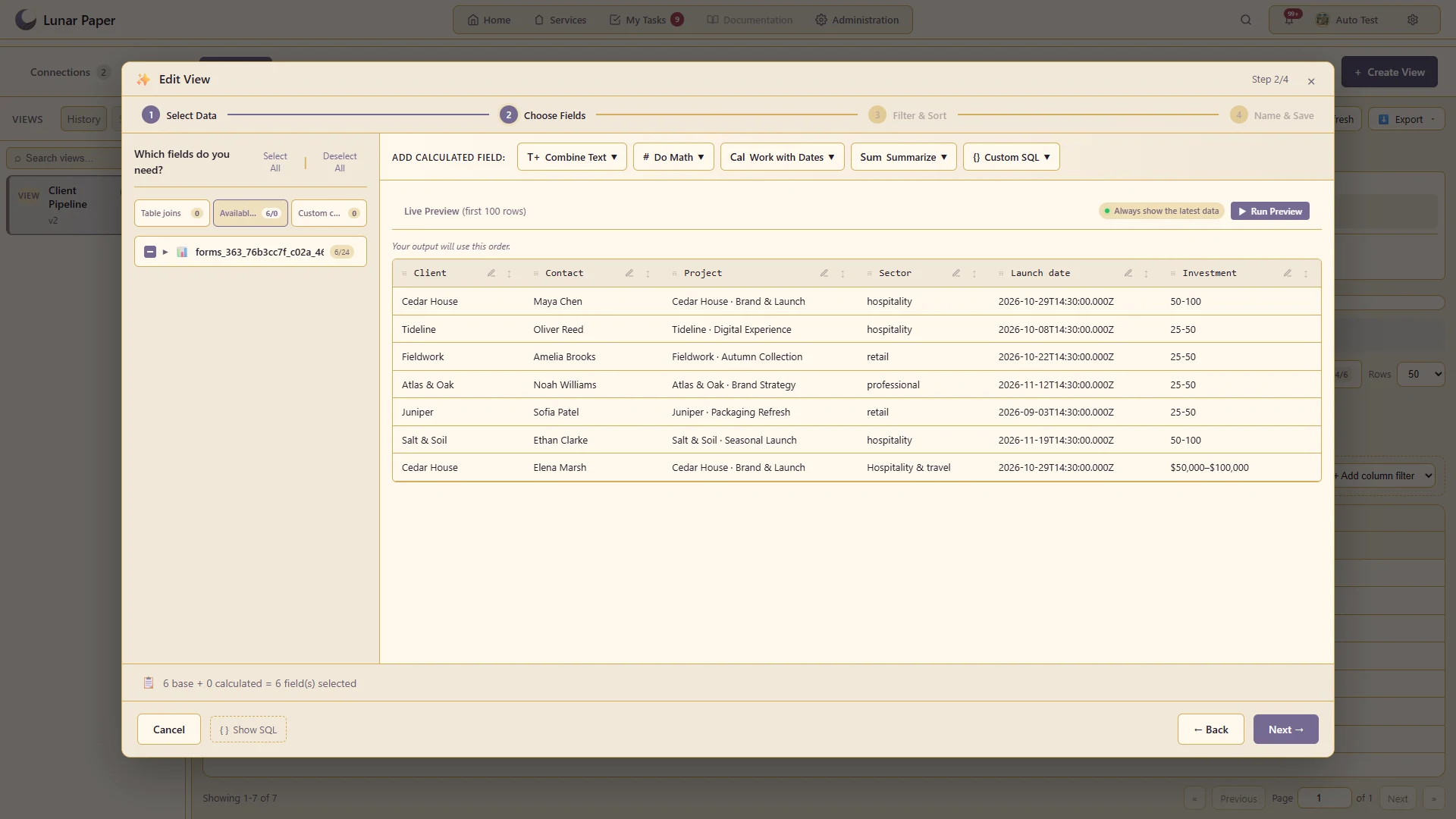
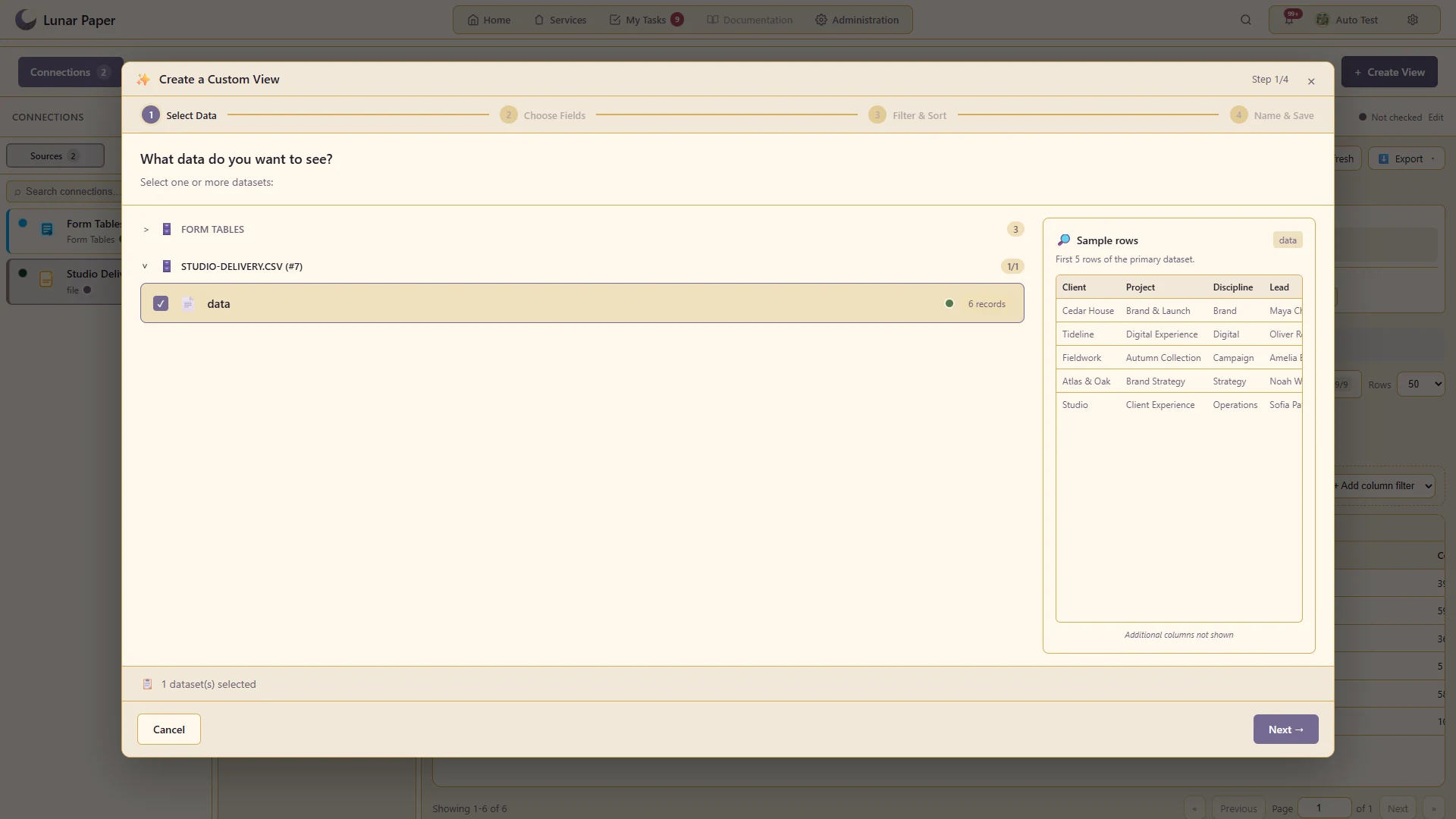
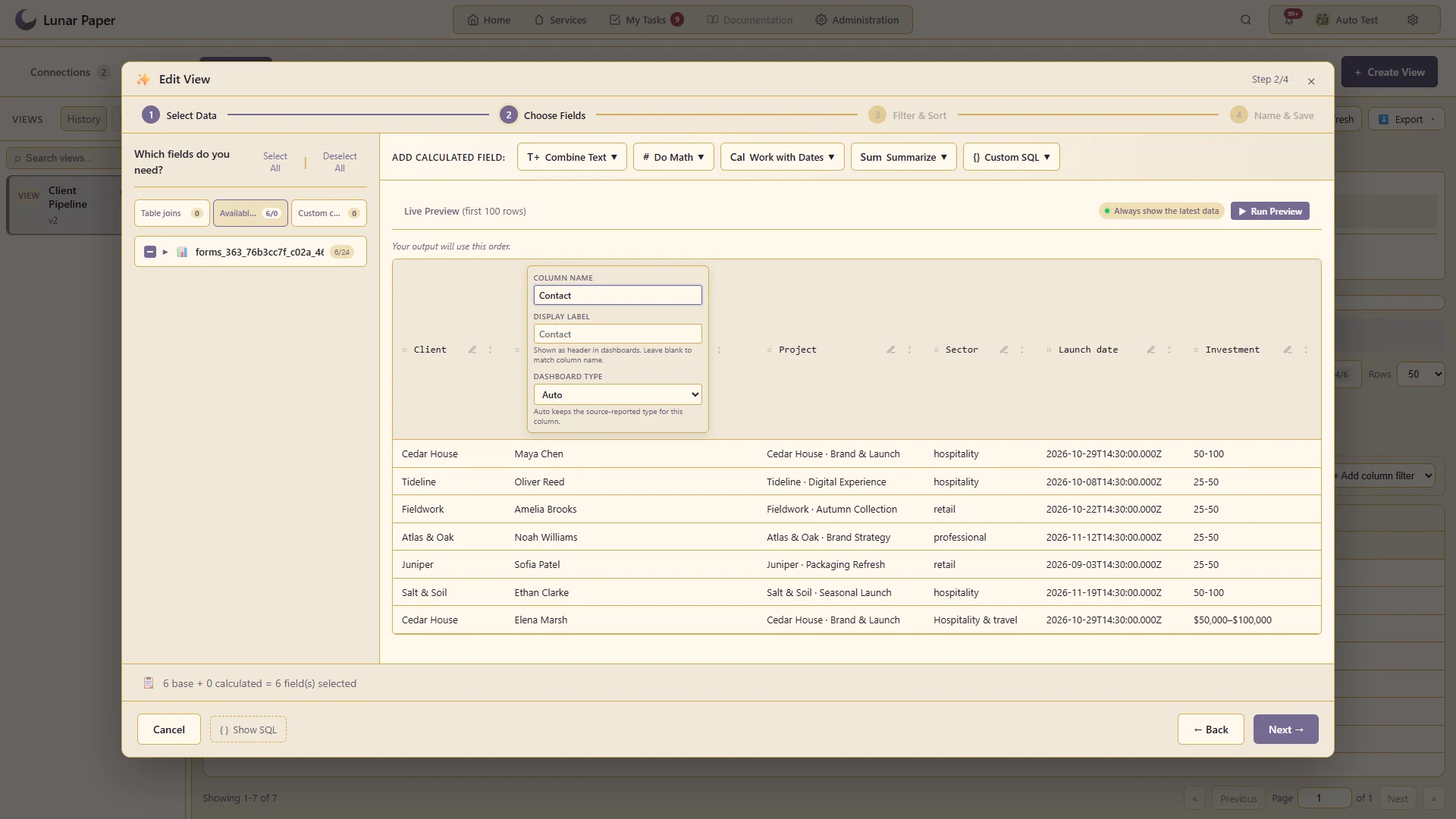
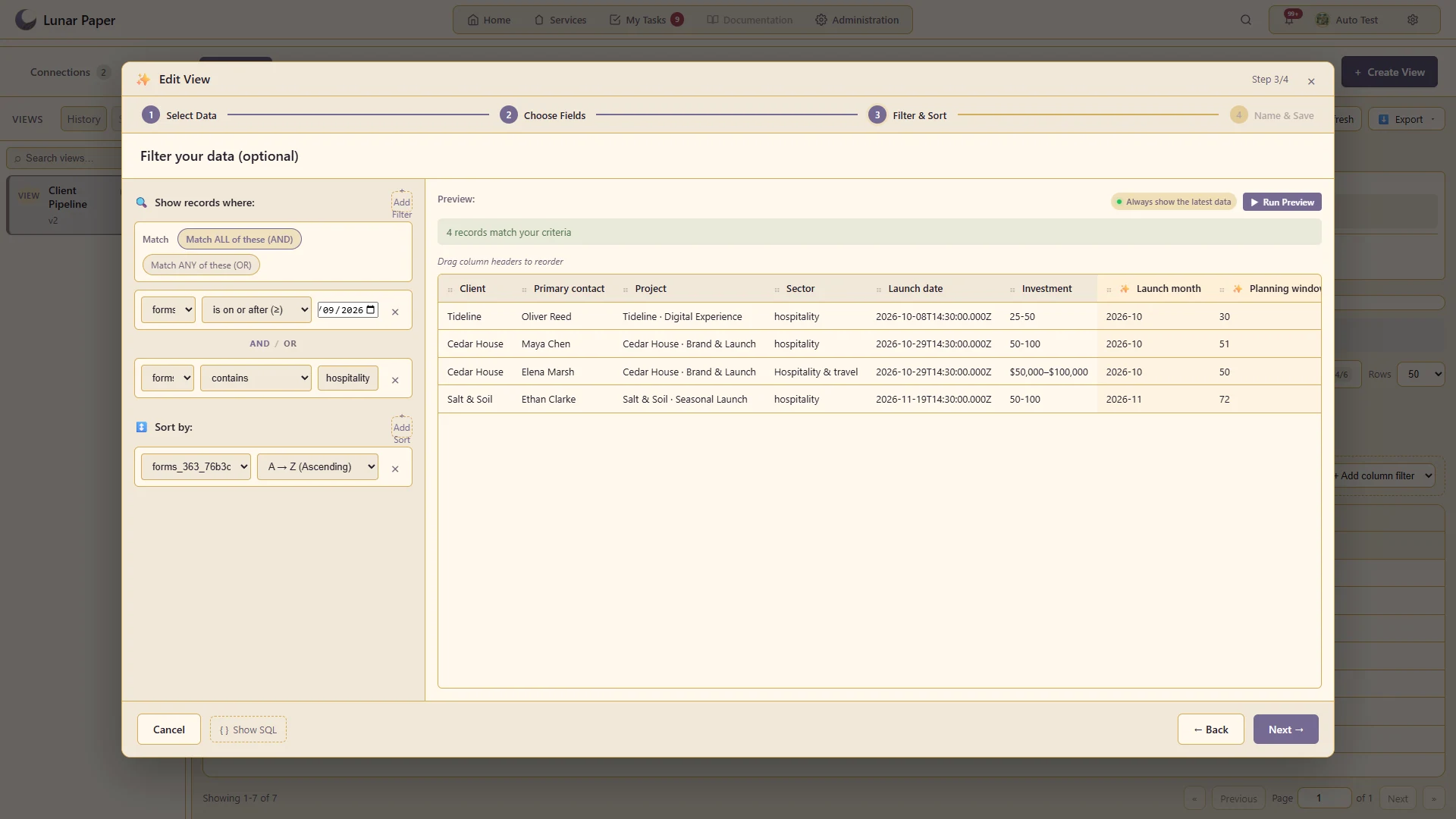
Select data, choose fields, add filters and save a reusable business view.
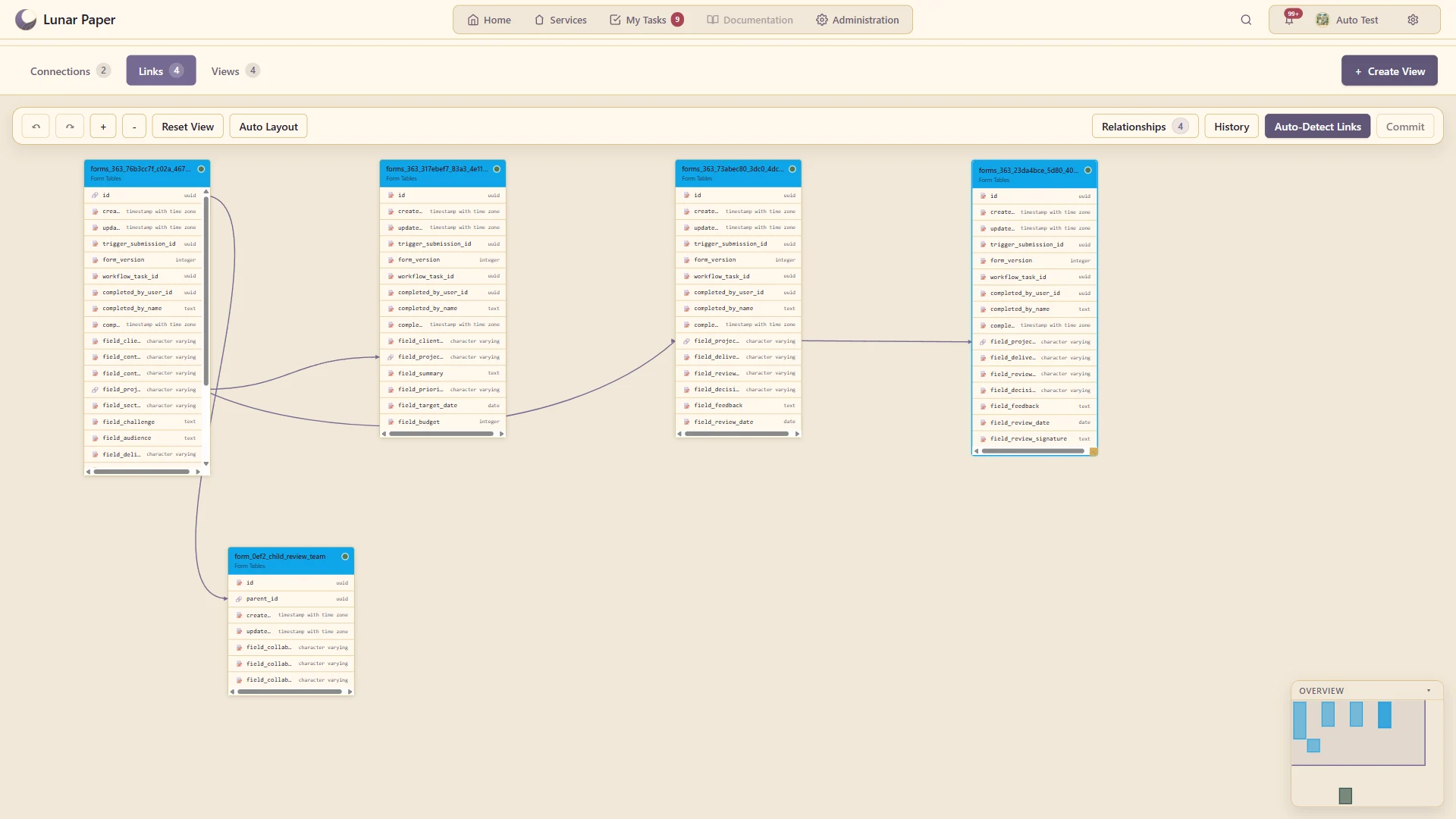
Connect related records and show the useful combined result.
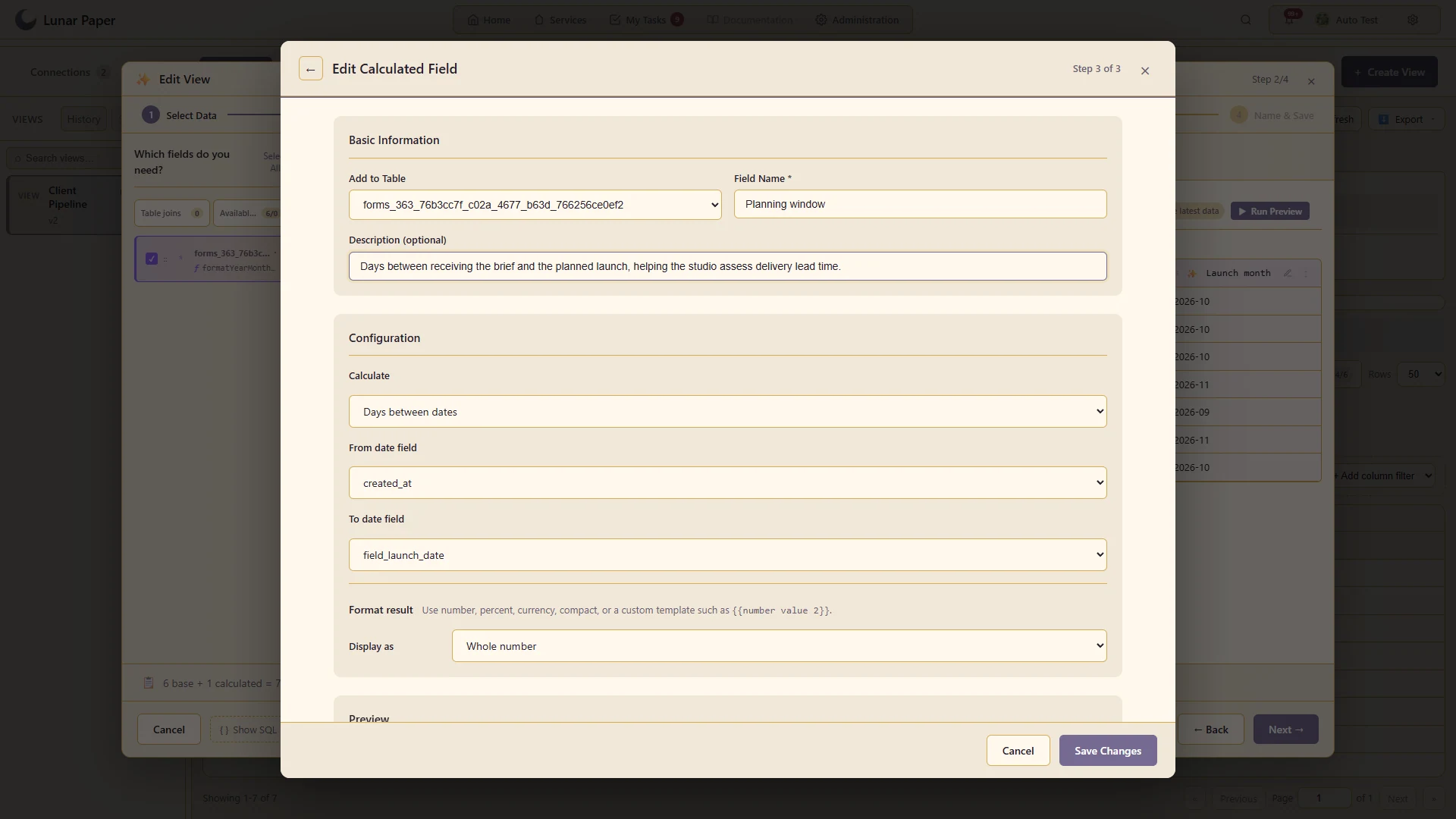
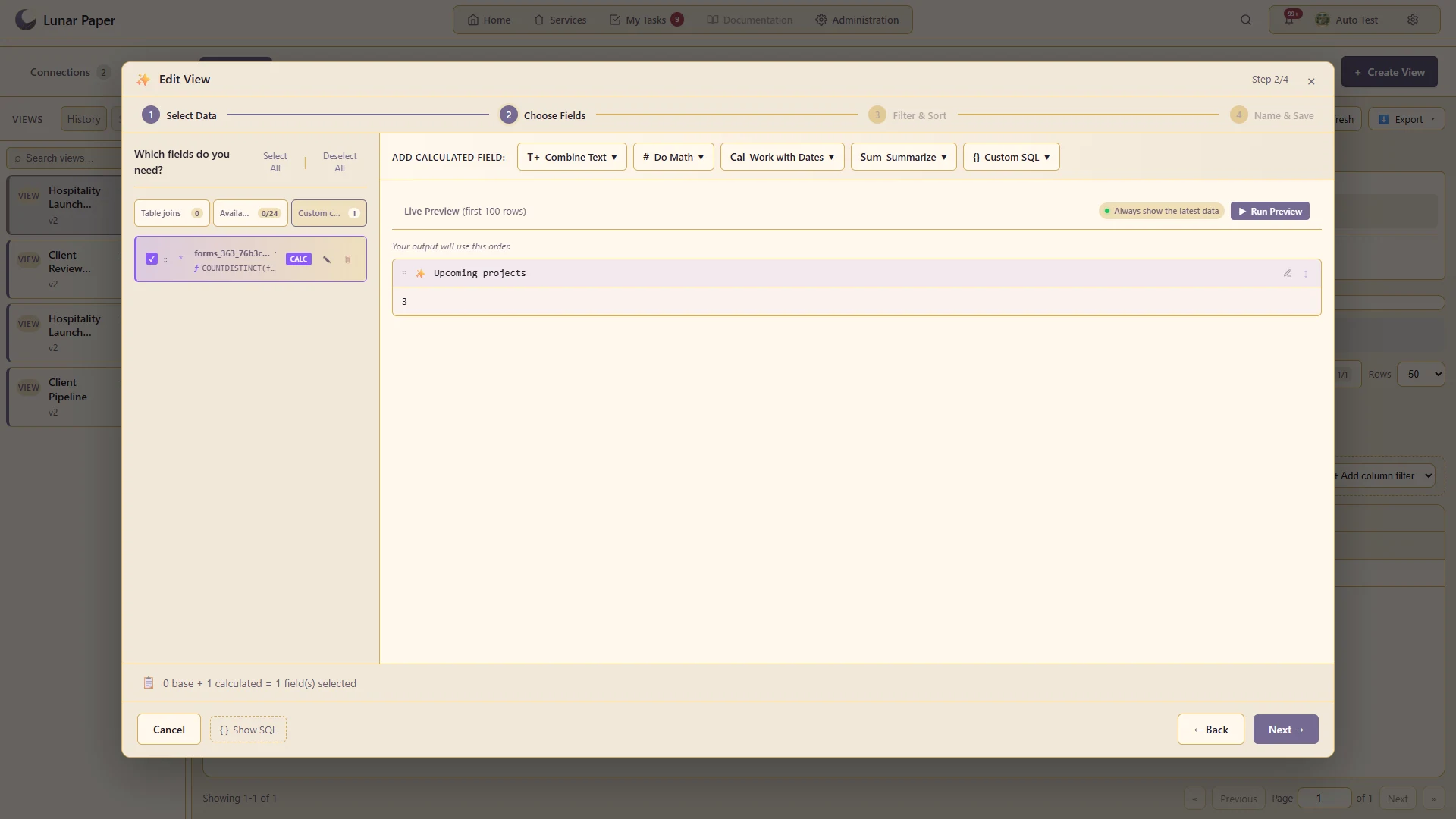
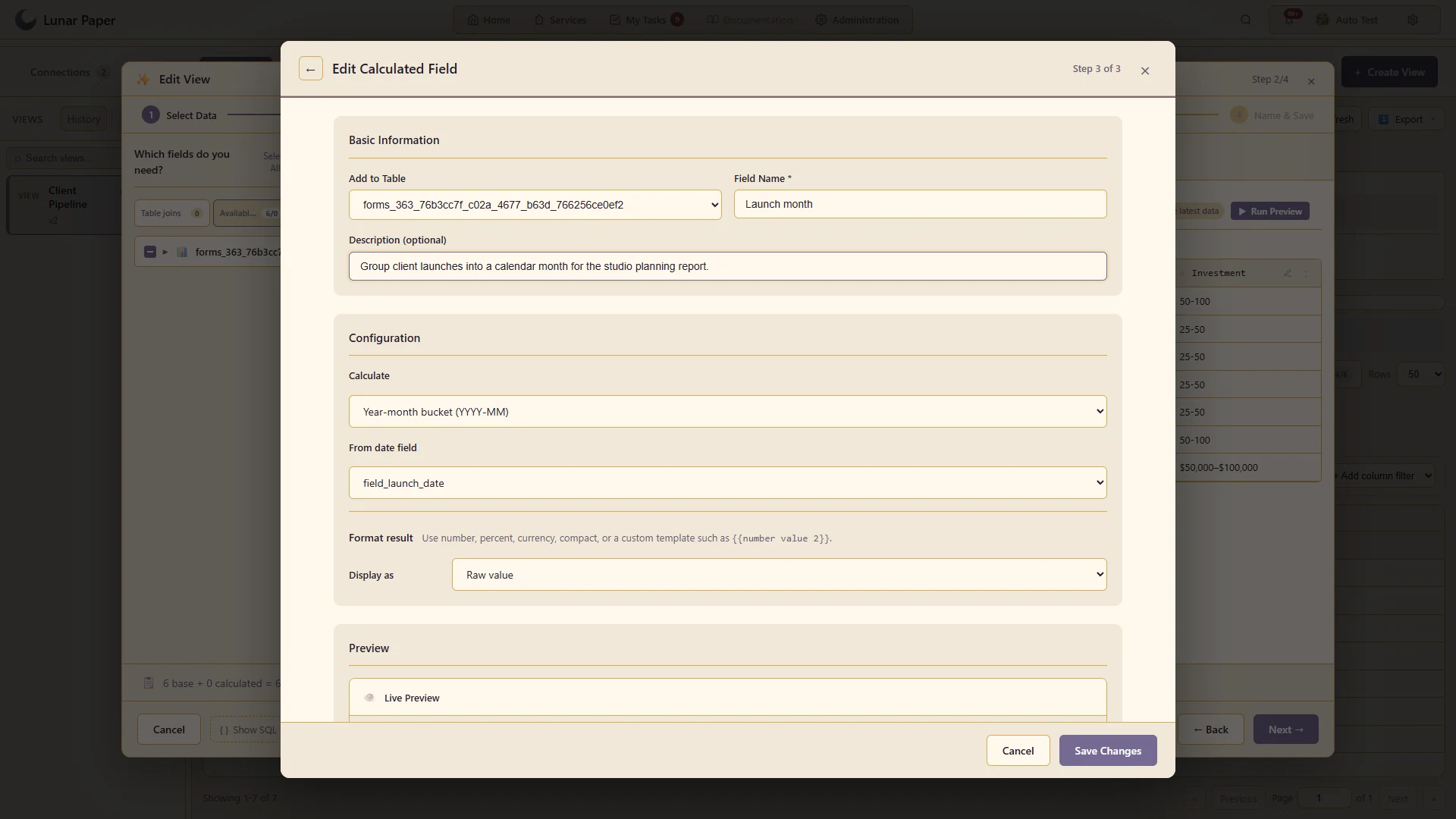
Build a new business measure from source values with a formula and preview.
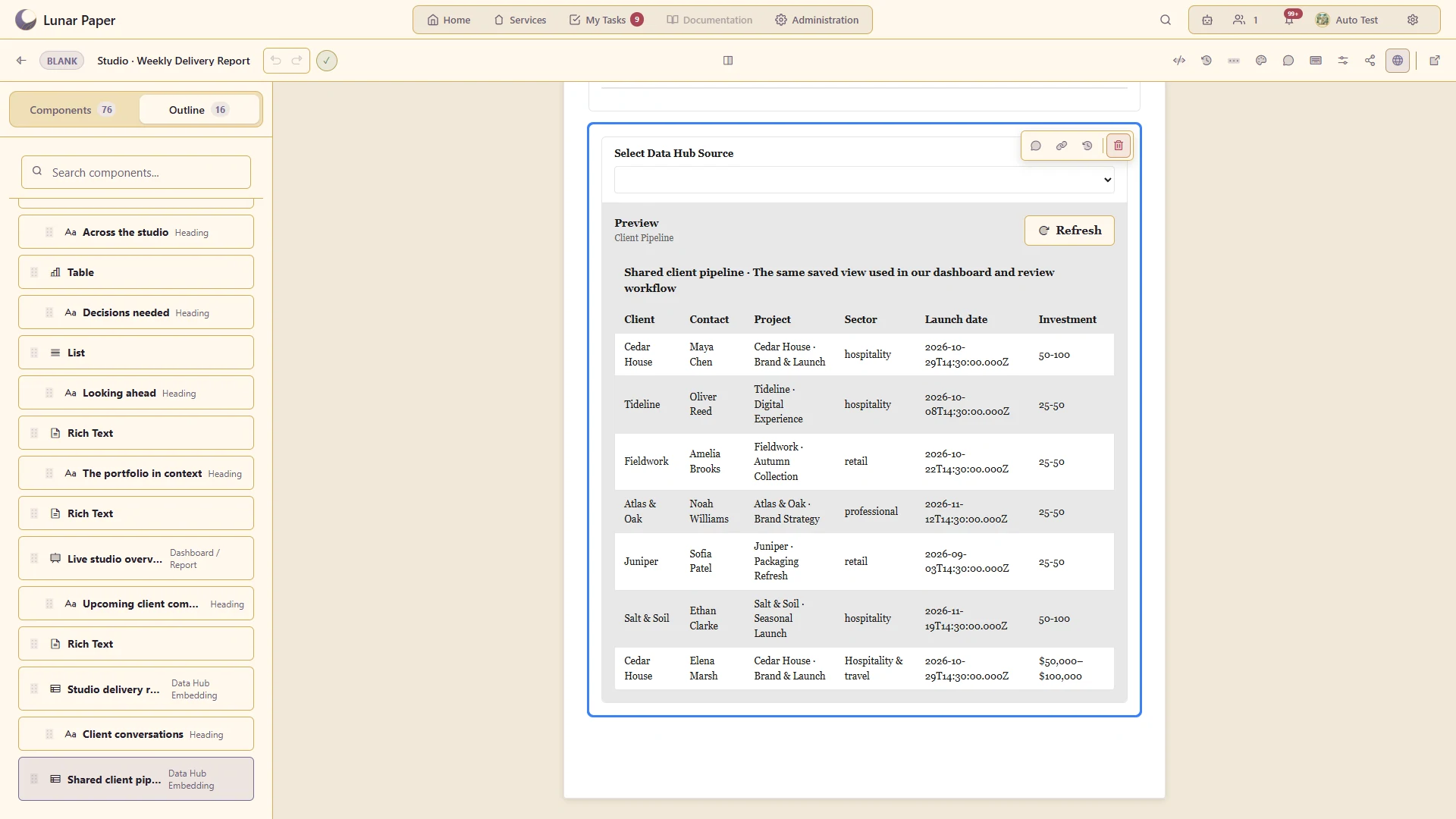
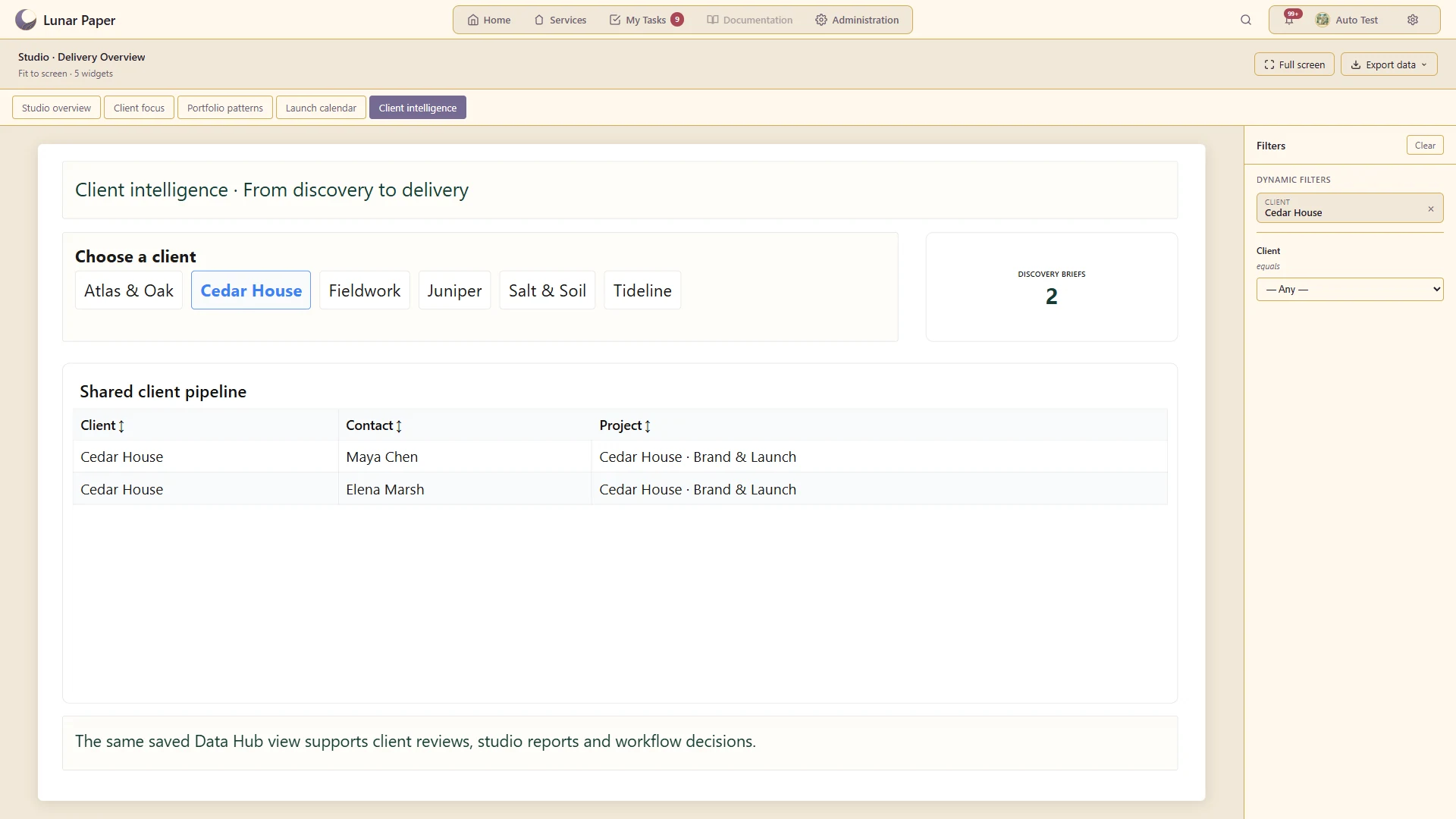
Use one saved view in a dashboard, document and workflow.
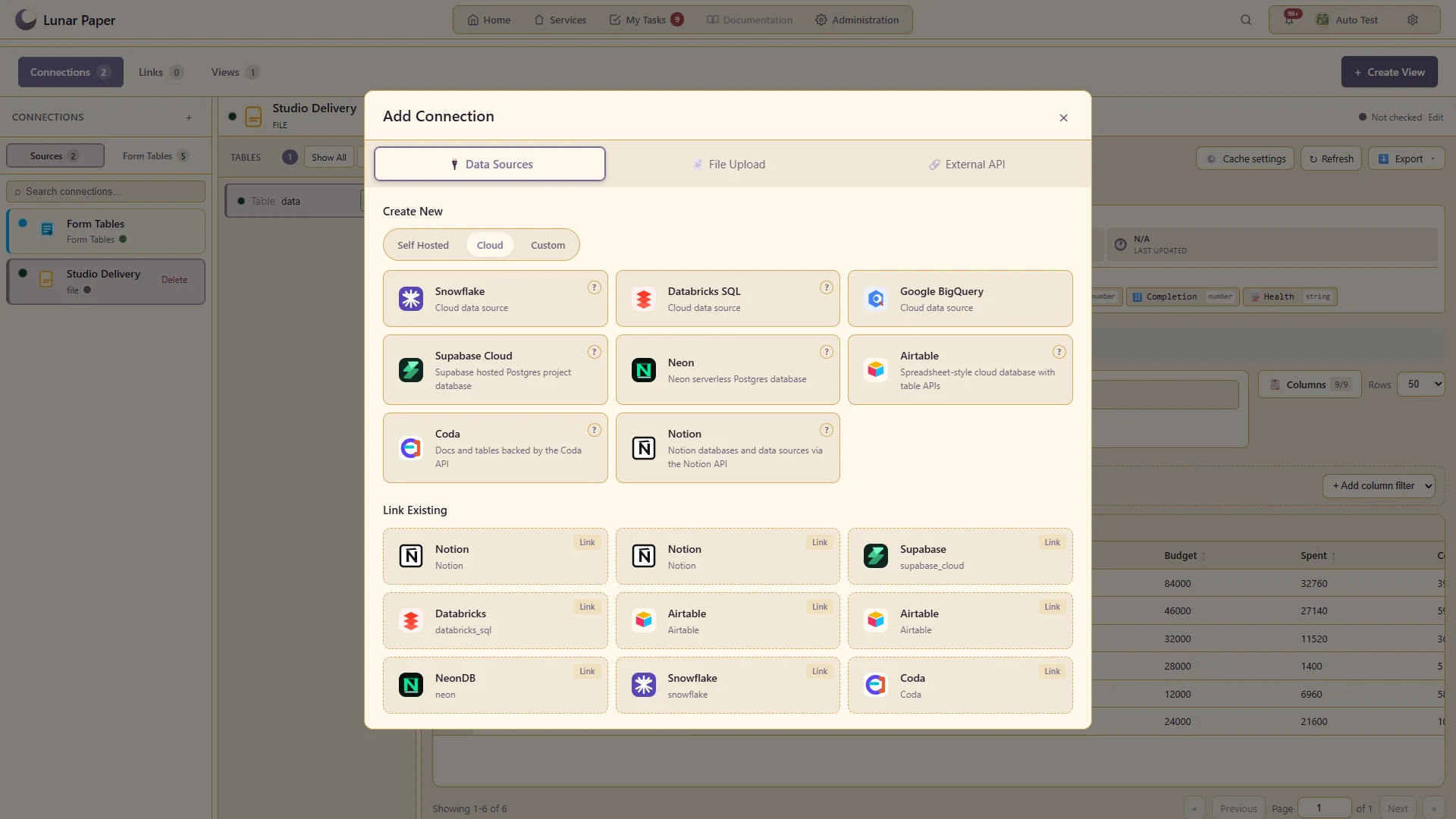
Show the supported database, file and API connection choices with an actual configured source.
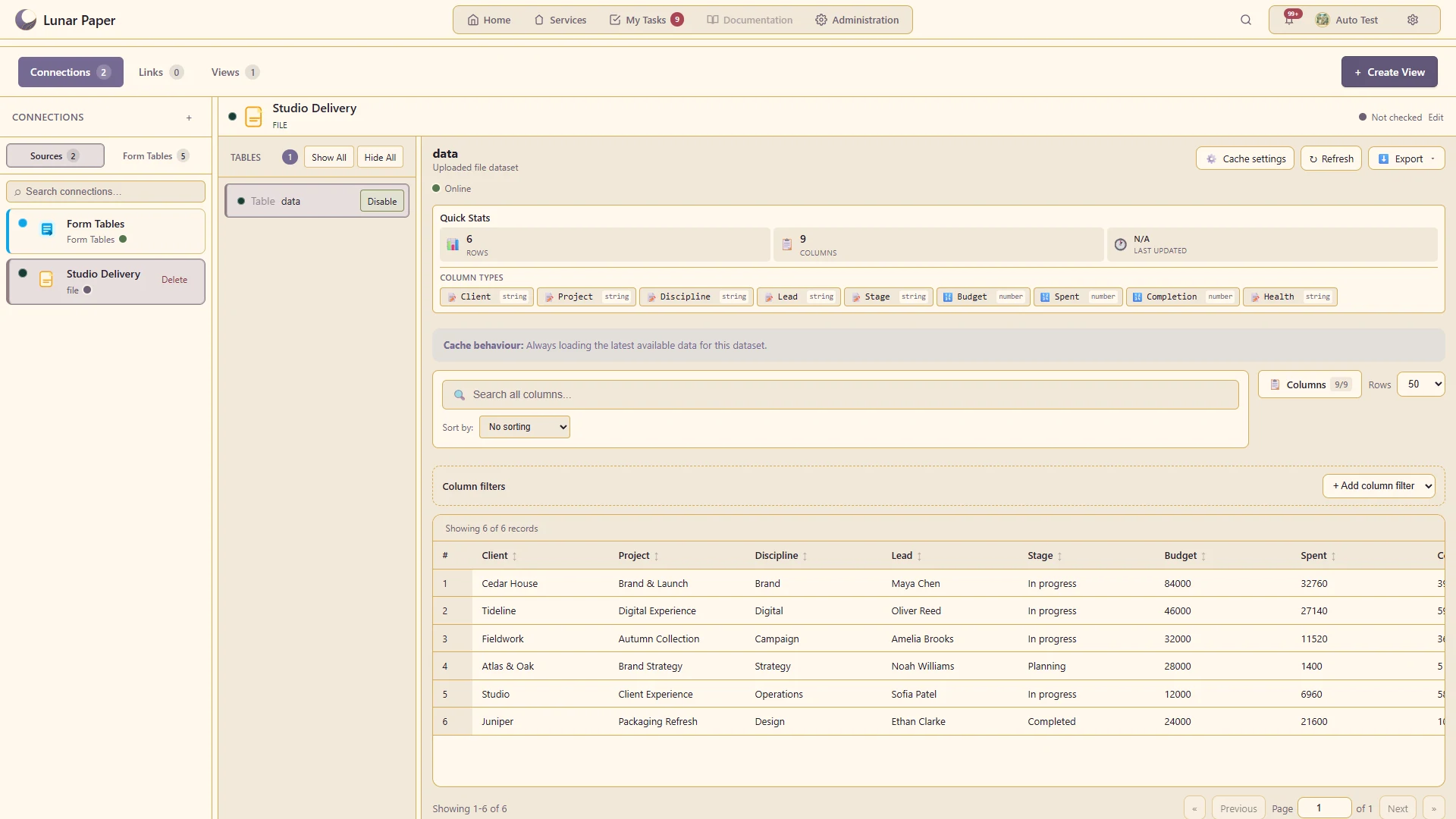
Bring supported tabular files into the same browsing and query experience.
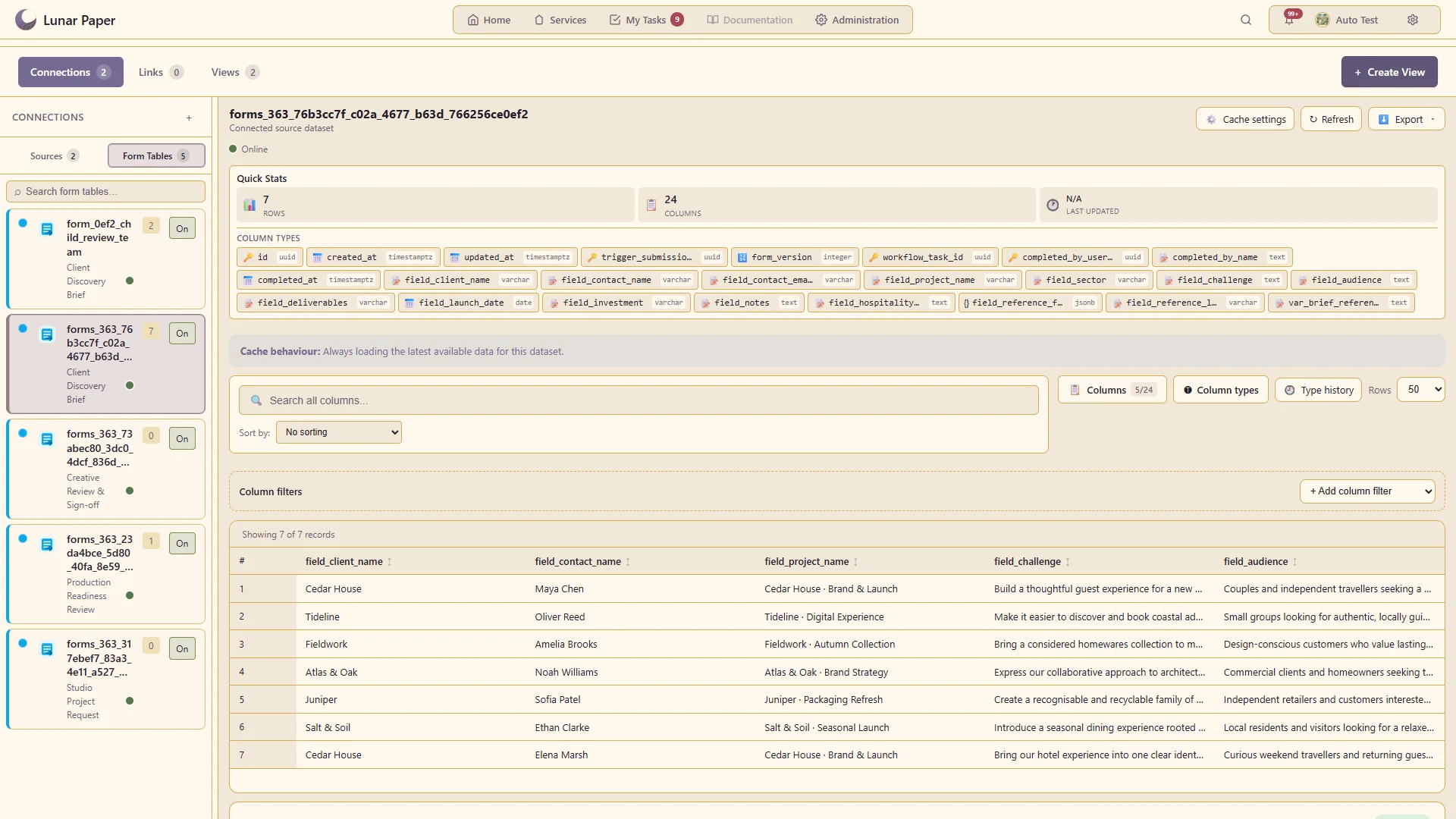
Use submitted form records as a source for reporting and automation.
Inspect available tables, columns and their types before building a view.
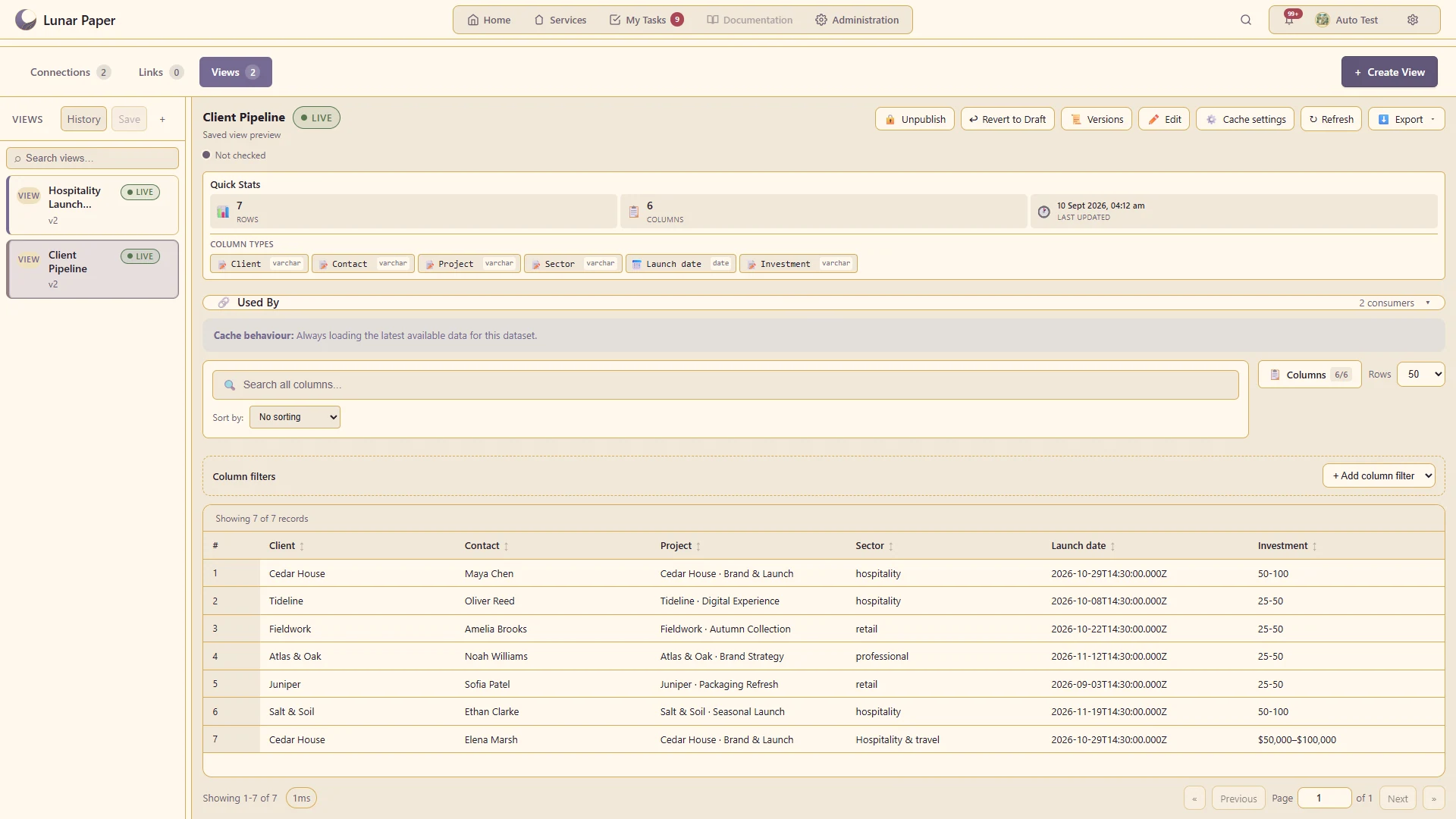
Inspect real rows and confirm the chosen source contains the required information.
Present meaningful business columns instead of exposing every raw field.
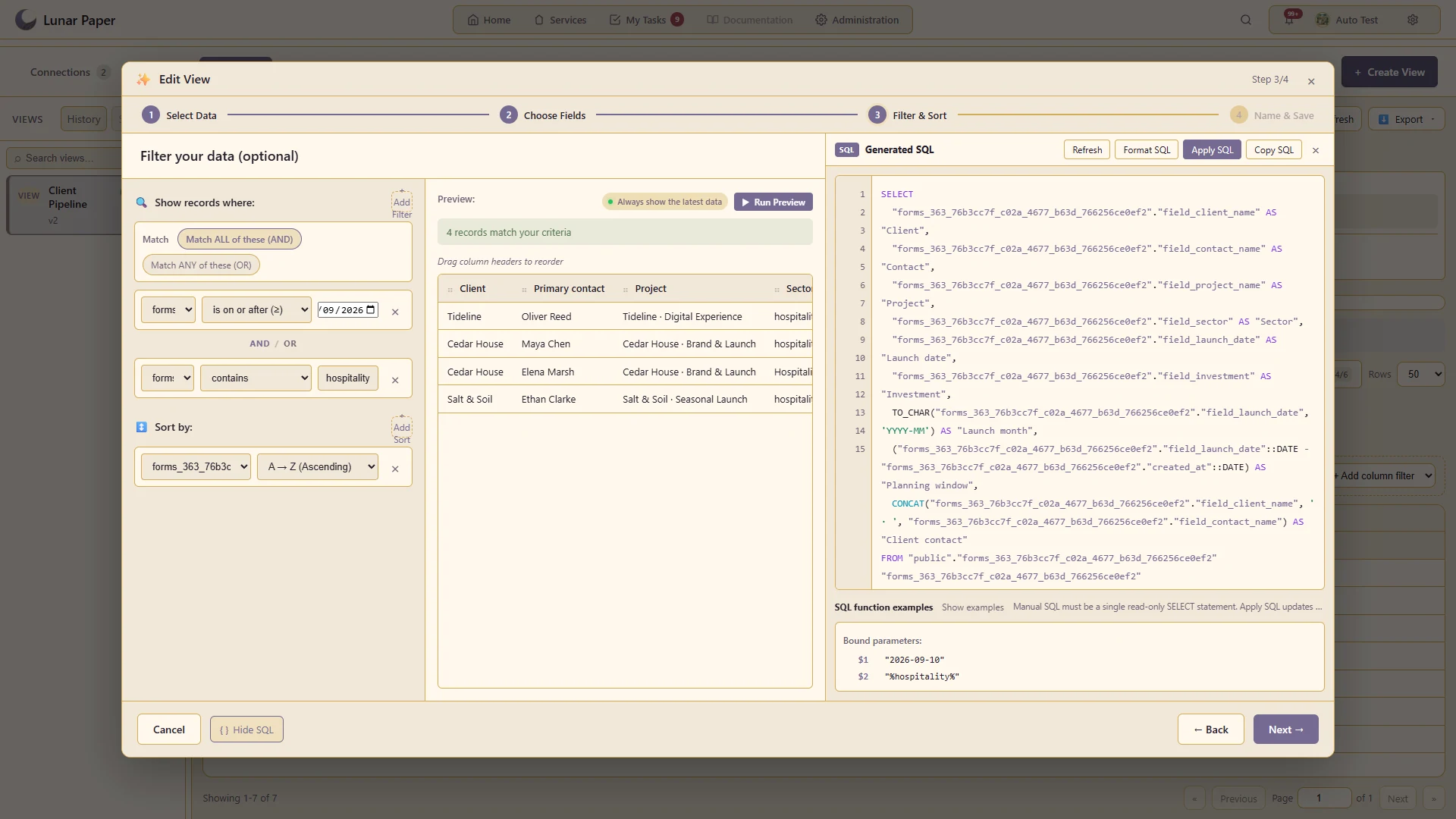
Define the criteria that make a saved view useful to a particular business question.
Order results and summarise records for downstream consumers.
Work with dates through the formula tools rather than manually maintaining derived columns.
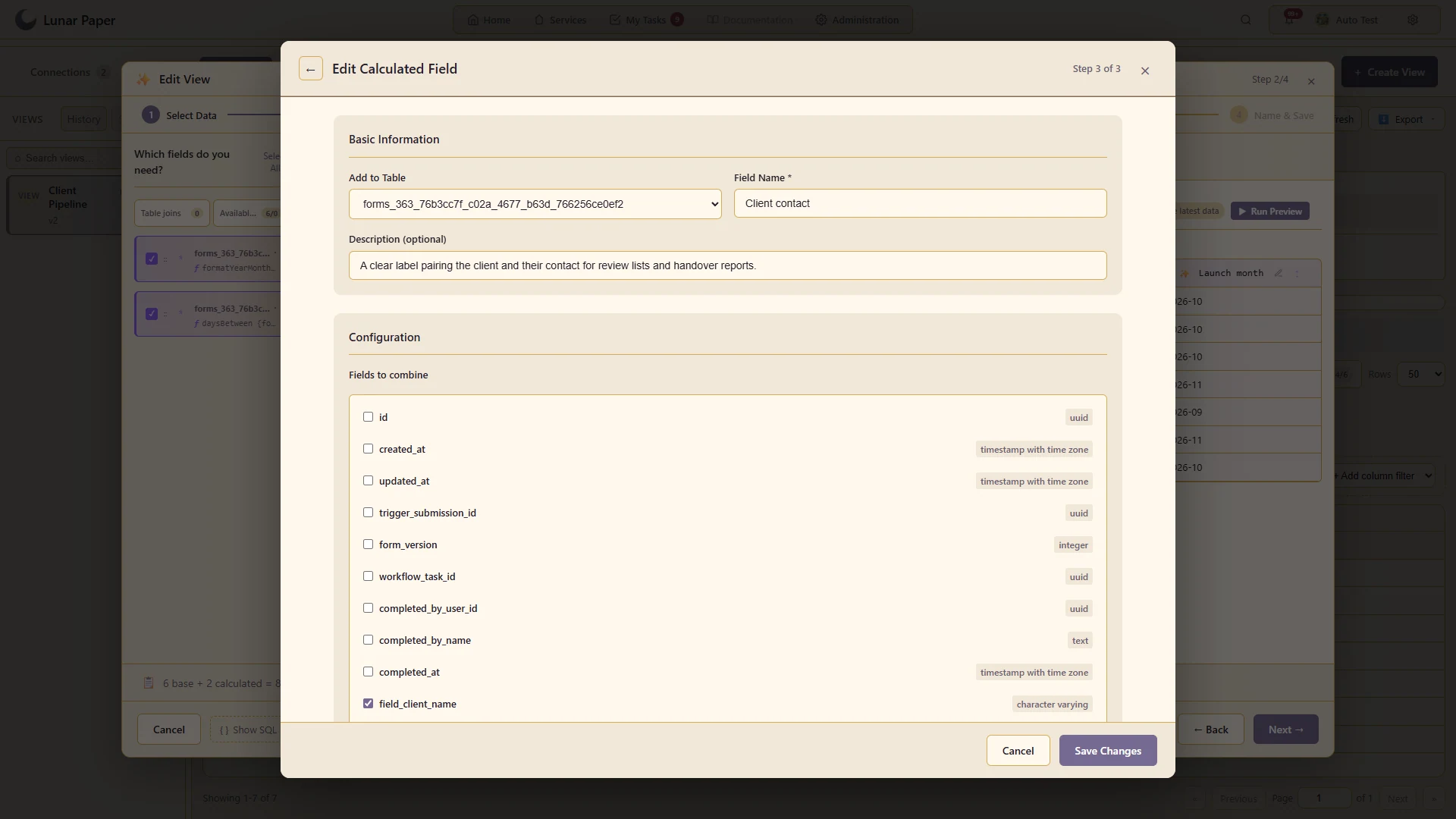
Combine labels or classify records into useful reporting groups.
Inspect or edit the supported SQL representation in the saved-view workflow.
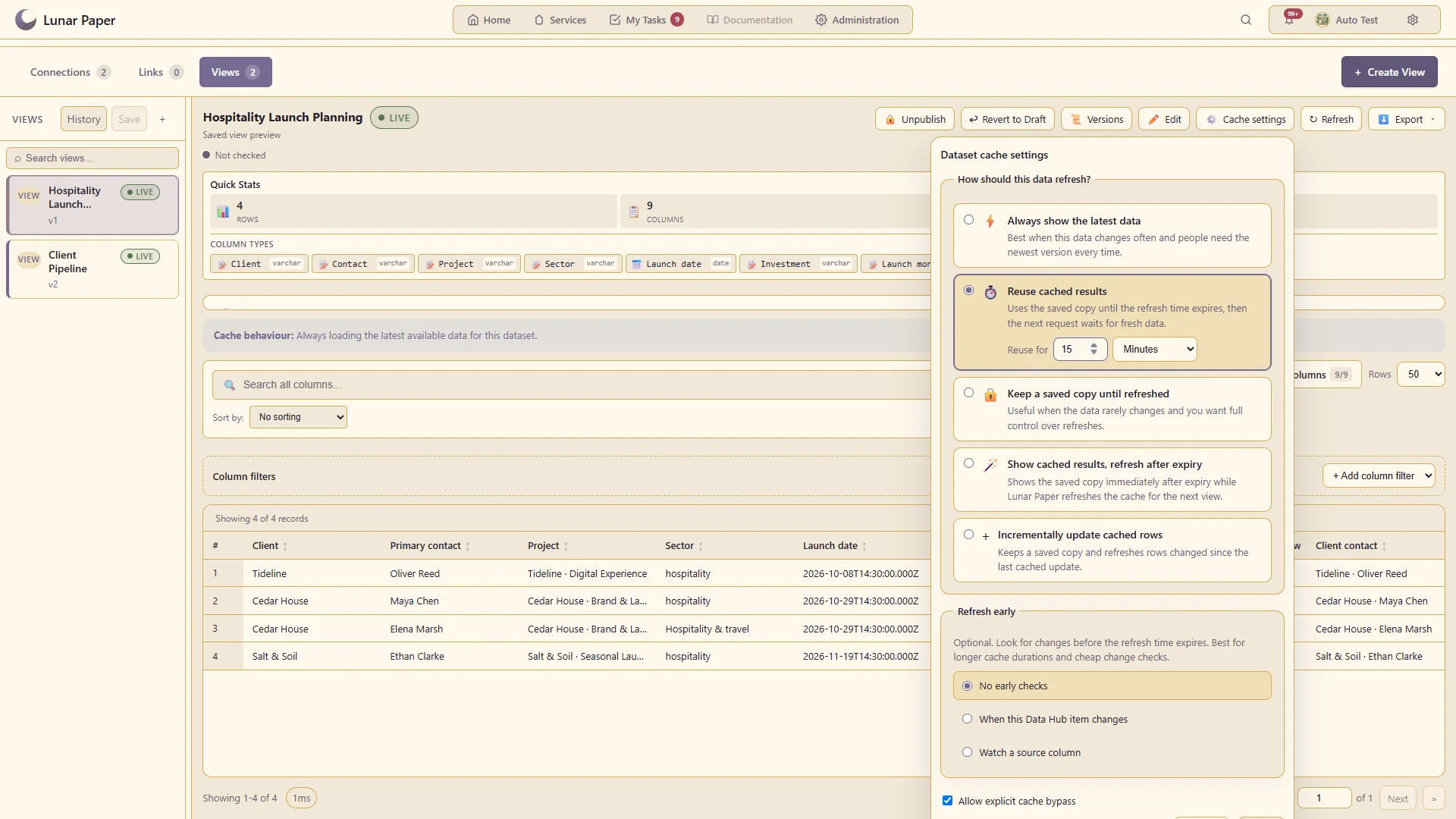
Choose how freshness and cached results should be handled for a dataset or view.
Let consuming applications ask for a relevant subset of the same underlying data.
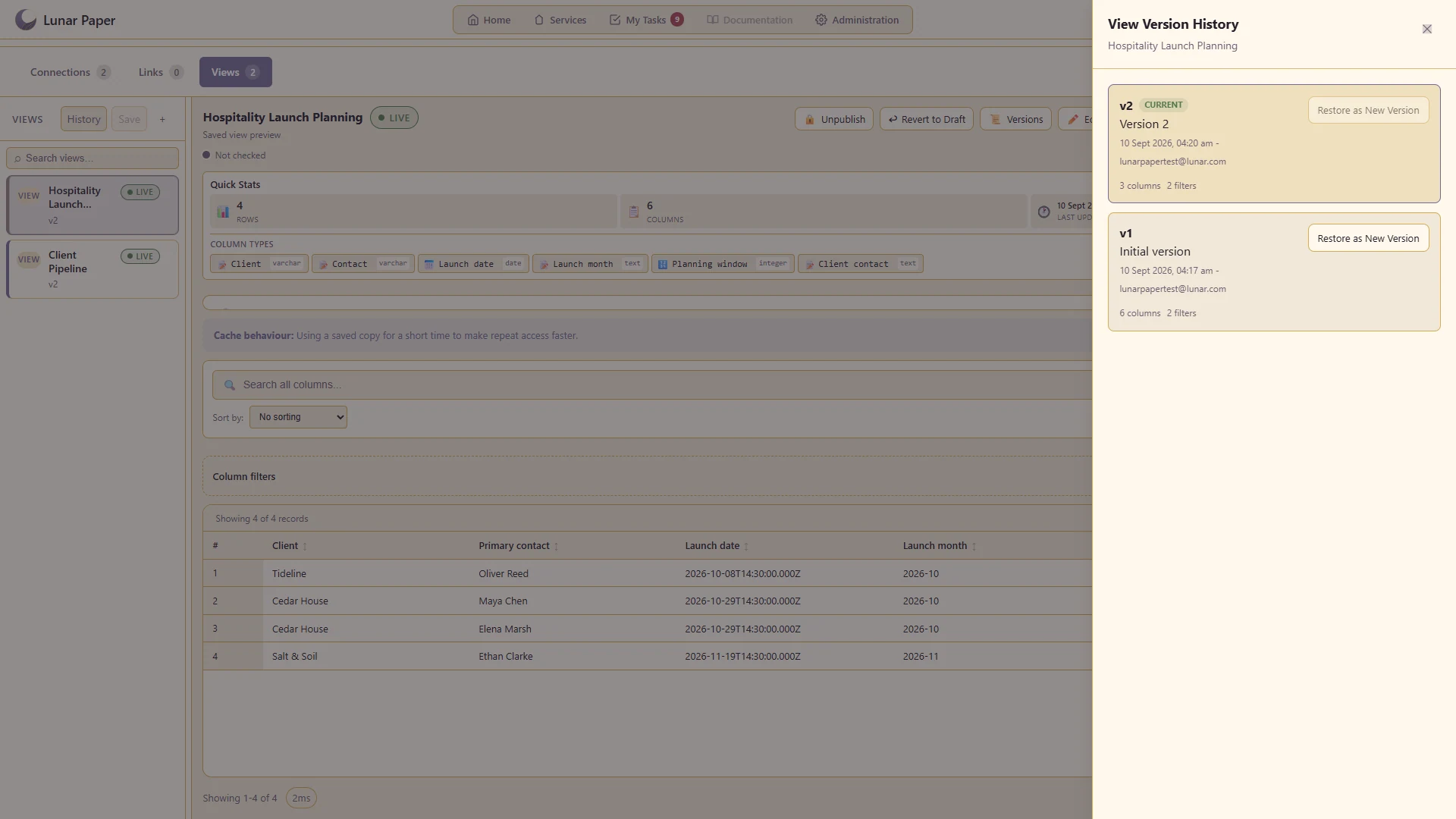
Inspect earlier definitions and maintain a history of changes to a shared view.
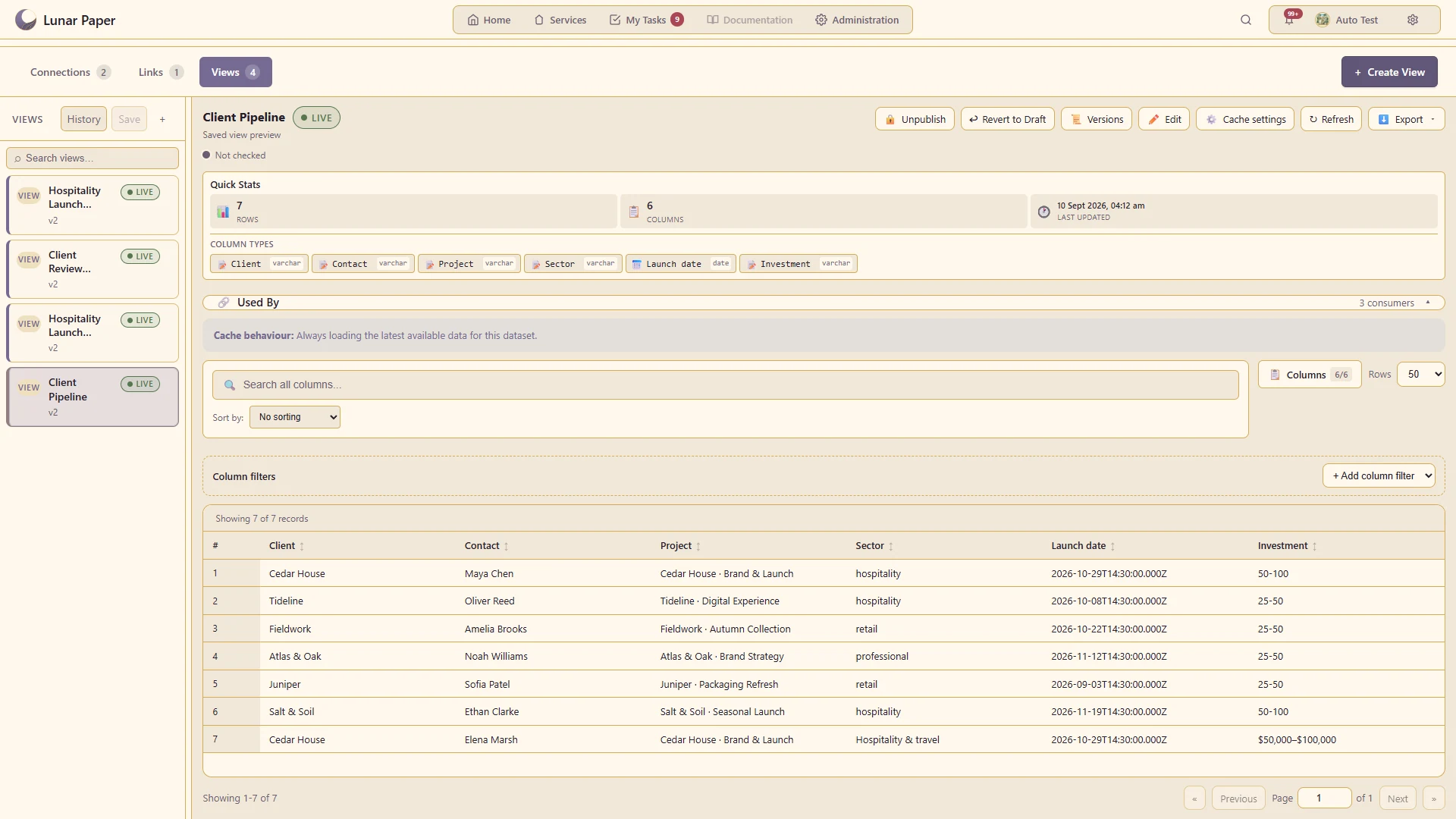
See where a view is used before changing a shared data definition.
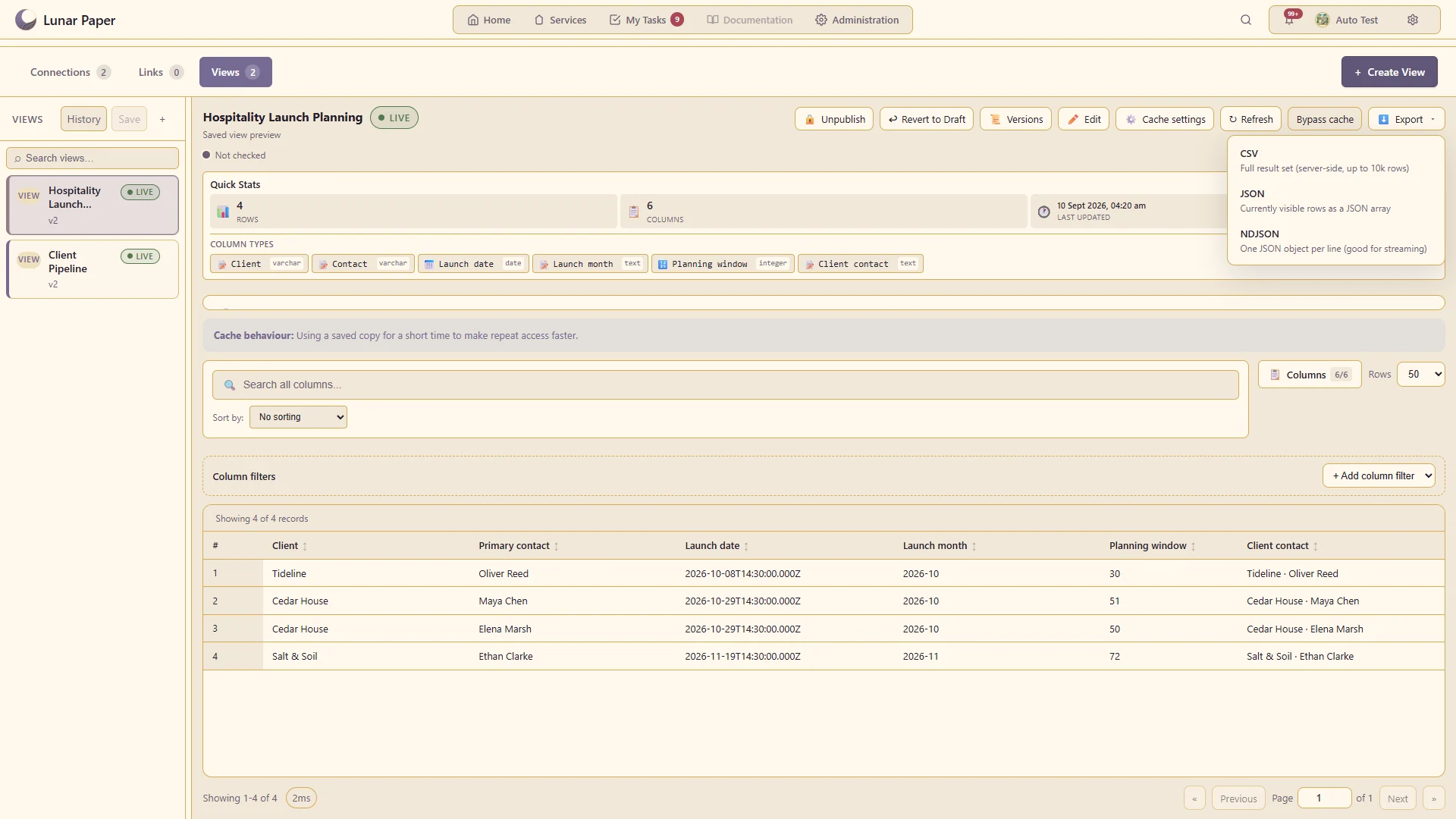
Export the displayed/query result using the supported formats and options.
The main areas Data Hub brings together.
Bring databases, cloud warehouses, files, web APIs and internal records into a governed source catalogue.
Browse schemas, preview records and understand fields before a source is reused elsewhere.
Define how data connects and add the meaning teams need to use it consistently.
Build filtered, sorted and calculated views that applications can reuse without rebuilding the same logic.
Control caching and availability while retaining context about where a view came from and where it is used.
Support controlled export, writeback and automation where operational processes need data to move.
Run the platform with all features for free for three people.